Divided Government and Your Retirement: Why Gridlock Isn't the Enemy of Your Nest Egg
Waking up to a divided Congress can easily trigger a wave of anxiety, especially when you are standing on the threshold of retirement.
When you rely on your savings to generate a steady paycheck, every political headline feels personal. It is natural to wonder whether a shift in power in Washington will shake the foundation of your financial house, disrupt your lifestyle, or put your hard-earned wealth at risk.
The reality is far more reassuring than the 24-hour news cycle suggests.
While election results can change the direction of policy in Washington, history shows they are rarely the primary driver of long-term investment performance.
The Reality of Divided Government
A divided government—where the White House and Congress are controlled by different political parties—often sounds like a recipe for instability. Yet historically, it is one of the most common political environments in our nation's history.
Similar divided structures occurred under Presidents Biden, Obama, George W. Bush, Bill Clinton, and during President Trump's first term.
In the vast majority of these periods, broad measures of economic activity and markets continued to move forward through the political transition.
Gridlock makes sweeping, disruptive legislative changes much harder to pass, which can actually create a more predictable operating environment for businesses.
While bipartisan agreement will be required for upcoming challenges like federal budget negotiations and the debt ceiling, gridlock has rarely stopped broad economic progress.
Wall Street vs. Main Street Sentiment
Right now, everyday Americans feel squeezed by persistent inflation, higher pump prices, and elevated borrowing costs. Consumer sentiment surveys sit near historic lows because family budgets are feeling the pressure.
However, the day-to-day pinch felt around the kitchen table does not automatically mirror what drives market returns:
Overall economic growth has continued to expand, supported by healthy consumer spending.
Innovation and infrastructure—such as the rapid growth of artificial intelligence (AI) and technology systems—continue to push corporate productivity forward.
Broader market health depends far more on corporate earnings, interest rate trends, and the business cycle than on the political party occupying Capitol Hill.
Building a Moat Around Your Retirement
When you are within five years of retirement or newly retired, you cannot afford to manage your savings based on who holds the gavel in Congress.
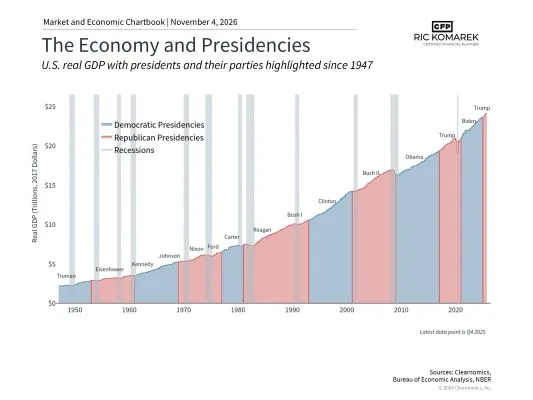
Instead of reacting to election cycles, your portfolio should rely on a financial moat: a durable mix of liquid reserves, income-generating assets, and long-term investments designed to endure shifting political winds. Real Gross Domestic Product (real GDP)—the total value of goods and services produced, adjusted for inflation—has steadily trended upward over decades, regardless of which party held the presidency or Congress.
Are you letting short-term political headlines distract you from your long-term life goals?
If you are navigating the critical five years before or after you leave the workforce, pick up a copy of The Retirement Red Zone or reach out to me so we can ensure your financial house remains secure through any election cycle.


