Why the Fed Raised Rates Again—and What It Means for Your Retirement
When headline news announces that the Federal Reserve just bumped interest rates, it is easy to feel a knot in your stomach. If you are standing on the threshold of retirement or already living on your hard-earned nest egg, volatility feels personal.
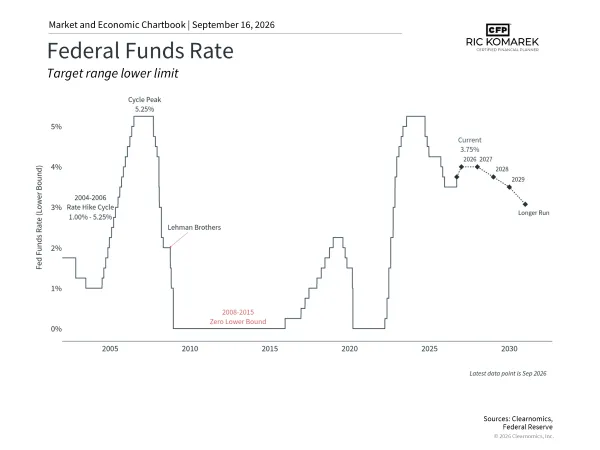
At its September meeting, the Federal Reserve raised its benchmark interest rate—the baseline rate commercial banks pay for borrowing money—by 0.25%, moving to a target range of 3.75% to 4.0%. It marks the first rate increase since 2023.
While conventional wisdom suggests rate hikes spell trouble, the reason behind the decision tells a much different story for your financial plan.
"Today's policy action will support a timelier return to the committee's 2% goal."
The Inflation Spark
The Fed's primary focus is keeping everyday living expenses from spiraling out of reach. Recent data from the Consumer Price Index, which tracks what typical households pay for a basket of goods and services, showed prices rose 3.4% year-over-year in August.
Higher energy costs led the charge, with oil and gas prices jumping 16.3%.
Rather than broad economic overheating, this hike targets specific commodity pressures.
Acting swiftly helps prevent rising daily costs from eroding your retirement purchasing power over time.
Why the Context Matters
Not all interest rate cycles are created equal. Back in 2022, rapid rate spikes unsettled markets because policymakers were viewed as playing catch-up. Today's environment is fundamentally different:
Anticipated Action: The bond market had already priced in a greater than 90% chance of this move before it happened.
Transient Drivers: Spikes tied to energy prices are often temporary disruptions rather than deep structural weaknesses.
Projections in View: Policymakers' forecasts signal borrowing costs could hold steady before gradually easing around 2028.
Building Your Financial Moat
Think of your retirement plan as a well-built house. Changing interest rates are simply shifts in the seasonal weather outside. When your foundation is solid, you do not need to rebuild the structure every time a storm rolls in.
Moderating inflation preserves your principal balance from real-dollar losses.
Steady underlying economic growth and productivity gains create lasting portfolio strength.
A well-diversified mix of assets acts like a wide moat around your savings, dampening short-term swings while generating dependable retirement cash flow.
Navigating changing interest rates is never about timing every shift by policymakers. It is about making sure your long-term income plan can handle whatever comes next without disrupting your peace of mind.
Is your current income plan built to withstand higher-for-longer interest rates?
If you are within five years of retirement or newly retired, reach out to pick up a copy of The Retirement Red Zone to see how we help protect what matters most.


