Beyond the Headlines: A Thankful Look at Your Finances
With the holiday season starting, it’s a perfect time to hit "pause" and take a moment to appreciate what we have. This is true for our personal lives, and it’s just as true for our financial lives.
In my experience, it’s human nature to focus on what could go wrong. We see a scary headline about the economy or a temporary dip in the market, and we feel that drop in our stomachs. We worry about our plan.
But if we take a step back and look at the big picture, especially after the year we’ve just had, we might find there’s a lot to be thankful for. Right now, with markets having performed well, I think it’s helpful to reflect on the past year to gain some valuable perspective.
1. We're Thankful for a Strong, Broad-Based Year
Financial markets have delivered strong returns over history, and 2025 has been no exception.
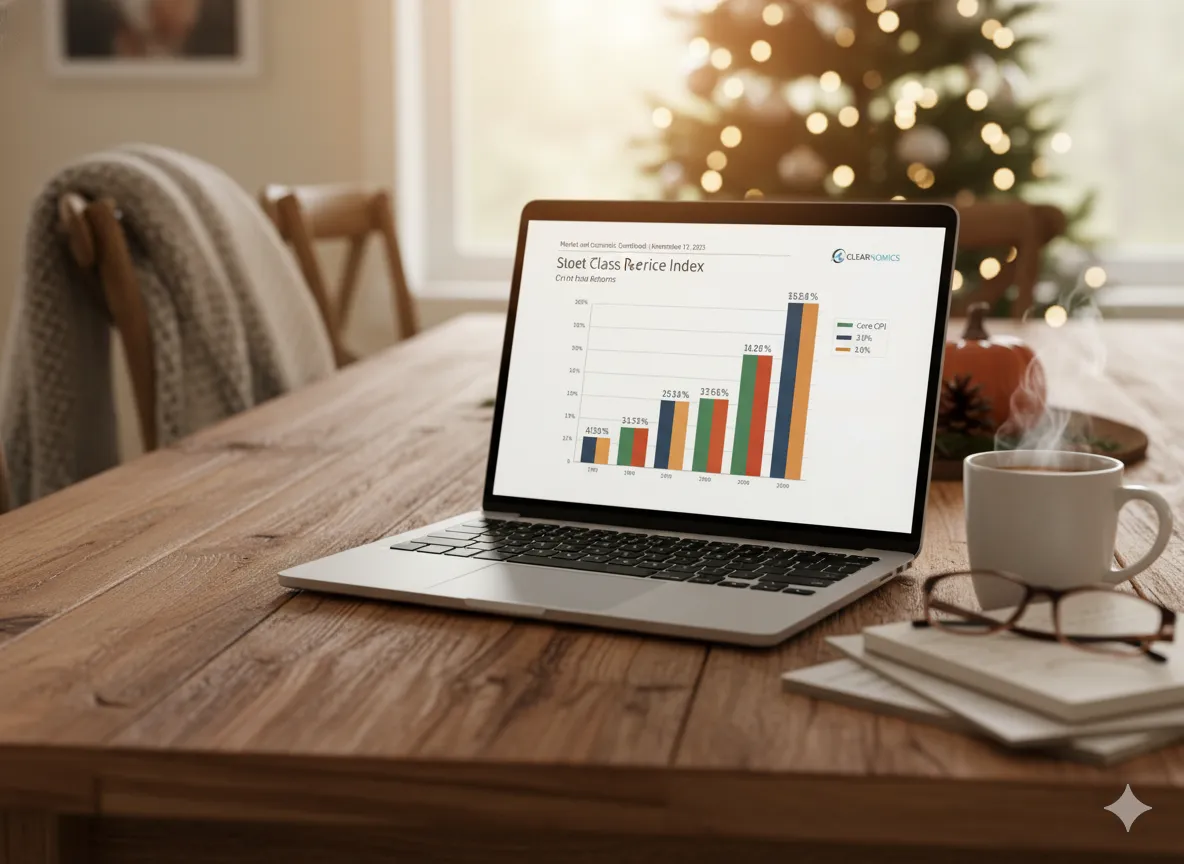
Take a look at this chart showing performance across different asset classes. You can see that many different areas have done well.

Emerging Markets (EM) and International stocks (EAFE) have led the way, with returns of 32.1% and 28.3%, respectively. This is a big deal because, for the first time in many years, international stocks have actually outperformed U.S. stocks.
But the good news didn't stop there. The S&P 500 (a key benchmark for U.S. large-cap stocks) is up over 15%, commodities are up 14.6%, and even the bond market has given us a positive return of 6.6%.
Why is this so important? It’s a powerful reminder of the value of diversification. When you have a properly balanced portfolio, you aren't just betting on one single thing. You have different parts of the market working for you, and it’s wonderful to see that "balanced" approach (the orange bar) deliver a solid 14.2% return.
2. We're Thankful for Market Resilience
This year also gave us a perfect example of why I always say time in the market beats timing the market.
Remember that dip we had back in April? The headlines were screaming about new tariffs, and markets fell close to bear market levels. It was a scary moment, and the temptation to "just get out" was high.
But what happened next? Markets not only rebounded, but they did so quickly and went on to reach new all-time highs. Investors who stayed disciplined and stuck to their long-term plan were rewarded. Those who reacted to the headlines may have sold at the bottom and missed the recovery.
This isn't a new story. I've included another chart that shows S&P 500 bull and bear cycles since 1956.

The small, gray-shaded areas are the bear markets (the drops). The long, rising peaks are the bull markets (the climbs). What do you notice? The climbs are dramatically longer and stronger than the drops.
This current bull market, which started back in October 2022, is now entering its fourth year. While that's no guarantee of what happens tomorrow, history shows us that these positive cycles often run for five, ten, or even more years. Sticking with your plan is how you give yourself the chance to participate in them.
3. We're Thankful for Calmer Inflation
The third thing I'm thankful for is that inflation, while still a challenge, finally seems to be calming down.
Here’s a look at the Consumer Price Index (CPI) over the long term.

That huge, scary spike we all lived through from 2021 to 2023 has been settling back down. The latest data shows inflation running at 3.0% (both "Core" and "CPI").
Now, 3% is still a challenge for households, and it’s higher than we’d like. But from an investment perspective, the fear of runaway, 1970s-style inflation is fading.
This has allowed the Federal Reserve to finally start cutting interest rates. This is a relief for both stocks and bonds. For those of us in or near retirement, this is particularly good news, as it brings stability back to the bond side of our portfolios, which we rely on for income and as a "shock absorber."
So, What Do We Do Now?
After a strong run-up like this, it’s easy to feel either invincible or terrified that a crash is just around the corner. The right answer is neither.
This is not a time for greed; it's a time for prudence.
Yes, markets have done well. But we can also see that some parts of the market, like the S&P 500, are looking a bit expensive. Its price-to-earnings ratio is at 22.6x, which is above average and getting closer to the levels we saw during the dot-com bubble.
That doesn't mean we should panic and sell everything. It just means we need to be smart. It reinforces the importance of being balanced and not having all your eggs in one basket.
There will always be something to worry about. Next year, it will be something new—worries about AI, politics, the national debt... you name it.
Our job isn't to predict the future. It's to build a "financial house" that is strong enough to withstand any storm. Your asset allocation—your specific mix of stocks, bonds, and other assets—is the key to that. It’s what helps you manage risk while still capturing the opportunities for growth.
As you gather with family this holiday, take a moment to be thankful for the good things, including the progress you've made on your financial goals. The key isn't to react to the news; it's to have a plan you can stick with.
If all this market noise has you wondering if your plan is still aligned with your goals, let's set up a time to talk. That's what I'm here for.


