Why the Upcoming Midterms Matter to the Country—and Far Less to Your Portfolio
With the midterm elections approaching, political coverage is everywhere. It is easy to feel that the future of the economy—and your hard-earned retirement savings—hangs entirely on which party controls Capitol Hill.
When you are retired or nearing retirement, headlines about changing majorities, taxes, and policy shifts can feel personal. But as citizens and voters, our emotional stakes often cloud our financial perspective.
History shows that while elections matter deeply for the direction of the country, they historically matter far less to long-term portfolio performance than most investors expect.
What Is on the Line in Washington
Midterm elections determine the makeup of the House of Representatives and the Senate. A shift in leadership can alter the legislative agenda, affecting discussions around:
Entitlement programs, including Social Security and Medicare
Corporate and individual tax provisions
International trade, tariffs, and defense spending
Federal debt and fiscal policy
While these topics are critical, political changes tend to happen gradually and with significant lags. Real-world economic impact often develops much more slowly than fast-moving news cycles suggest.
What History Teaches Us About Market Returns
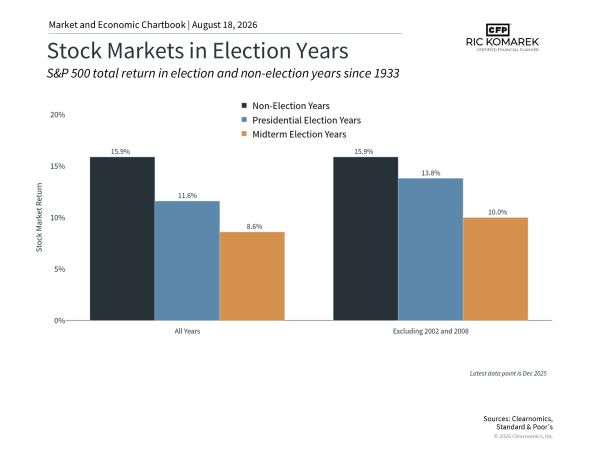
Looking at market history dating back to the 1930s, broad market indexes have delivered positive average returns across presidential election years, midterm election years, and non-election years alike.
Non-Election Years: Historically delivered average total returns of approximately 15.9%.
Presidential Election Years: Averaged positive total returns of around 11.6%.
Midterm Election Years: Averaged positive total returns of about 8.6% across all cycles (and roughly 10.0% when excluding severe economic downturns like 2002 and 2008).
Market growth has persisted under unified government, divided government, and through frequent shifts in Congressional power.
The Real Drivers Behind Your Financial House
Markets do not rise and fall purely on the balance of political power. The structural pillars supporting your portfolio are grounded in broader economic realities:
The Business Cycle: Corporate earnings, productivity, and employment trends
Monetary Policy: Interest rate environments set by the Federal Reserve (the Fed)
Technological Innovation: Long-term productivity shifts across industries
When we look back at past midterm volatility—such as inflation spikes or interest rate shifts—the underlying economic environment drove market swings, not the election calendar itself.
Protecting Your Peace of Mind
Building a solid financial foundation means constructing an asset allocation designed to weather shifting political seasons without requiring you to make knee-jerk decisions. By maintaining adequate cash reserves and diversified assets, you create a buffer against short-term market noise.
If political developments make you feel like altering your investment strategy, ask yourself: Are you responding to an actual shift in your personal financial goals, or simply reacting to the daily news cycle?
If you are navigating the critical five years before or after retirement, you are in what we call the transition window—where keeping emotions out of your portfolio matters most. For practical strategies on building a resilient income plan through every market cycle, be sure to explore the insights in the book The Retirement Red Zone. And as always, if you want to review how your financial plan is positioned, feel free to reach out.


